DeepSnitch AI vs SHIB: The New Utility Narrative in 2026
Crypto attention moves fast. One week it is meme coins. Next week it is “utility.” Lately, several crypto outlets and exchange news feeds are pushing a clear storyline: DeepSnitch AI (DSNT) is “stealing attention” from Shiba Inu (SHIB) as traders rotate toward AI tools and analytics.
This article covers the narrative in a clean, ad-friendly way. We will separate hype from signals. We will explain what DeepSnitch AI claims to do, why SHIB still matters, and what metrics you should watch before you believe any “new era” headline.
By Yaser | Published on January 26, 2026
What “Market Attention” Really Means (And Why It Moves Fast)
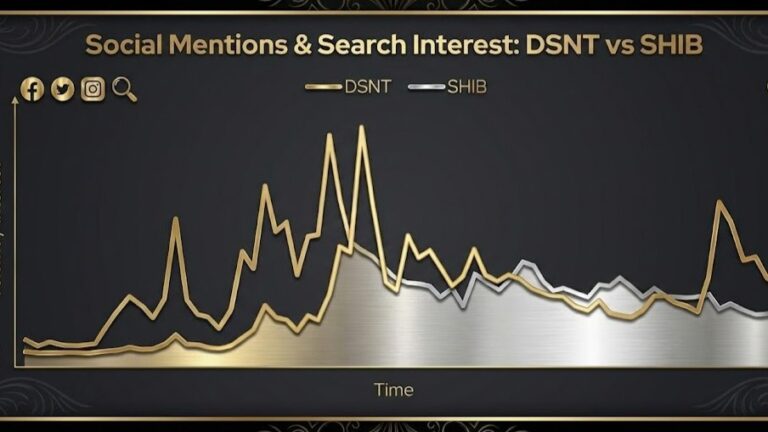
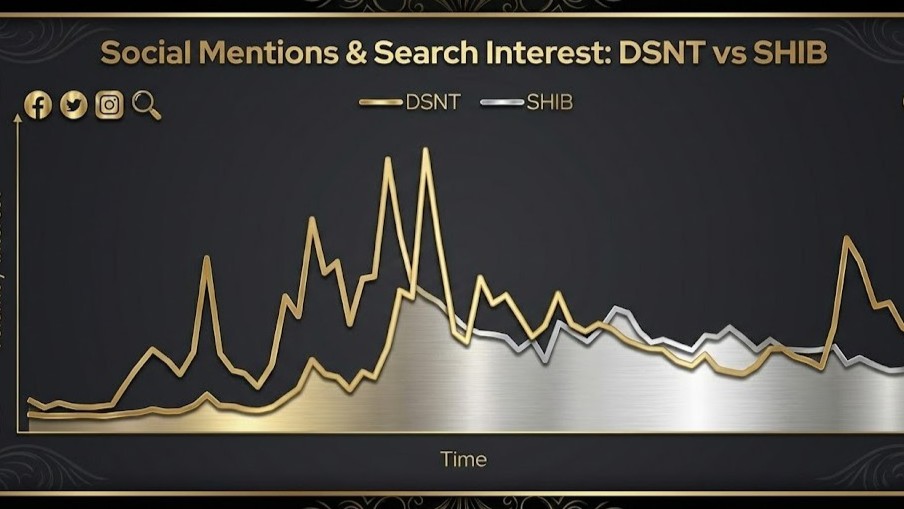
“Market attention” is not a single metric. It is a mix of searches, social mentions, article volume, and trader chatter. Because it is emotional, it often rotates toward what feels new. So, when a new token is labeled “AI utility,” it can pull attention away from a familiar meme coin, even if the meme coin is still heavily traded. That is why “overtakes” headlines can be misleading. Attention spikes can come from media distribution, from presale marketing, or from genuine interest. The safest way to read the story is this: DSNT is getting more headlines in some places, while SHIB remains a major reference asset.
Attention Is a Spotlight, Not a Verdict
A spotlight can point at something for many reasons. Sometimes it points at real innovation. Sometimes it points at a new marketing campaign. Either way, it does not confirm long-term strength. In crypto, attention often arrives before proof. That is why readers should separate “people are talking” from “people are using.” A trending topic can fade in days. Meanwhile, a token with deep liquidity can stay relevant even when it is not trending. So, if you read “DSNT overtakes SHIB,” treat it as a conversation shift, not a final outcome.The key point for readers is simple: a good story can boost attention even before a product is proven at scale.
Why AI Narratives Pull Clicks Right Now
AI narratives pull clicks because they promise clarity in a noisy market. They also promise speed, because traders hate being late. So, anything that claims “alerts,” “signals,” or “automation” feels like an edge. That is why AI-token headlines often outperform simple market updates. However, this also creates a problem: AI buzz attracts low-effort copycats and aggressive promotions. So, the same force that increases attention can increase risk. This is why verification matters more in AI-token stories than in long-established coins.
Why SHIB Can Lose “Buzz” Without Losing Importance
SHIB is a known name. Because it is known, it can become “background noise” for some traders. That makes it easier for a newer topic to steal attention. But importance is not only about buzz. SHIB still shows up in on-chain analytics and whale-related coverage, which means big holders and big flows are still being monitored.
In other words, SHIB can be less trendy for a week and still remain a major market thermometer.
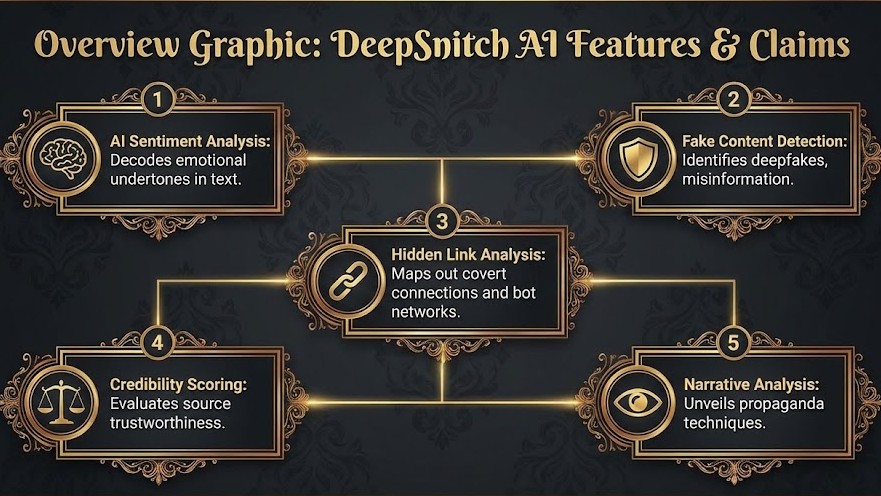
DeepSnitch AI in Plain English: What’s Confirmed vs What’s Claimed
DeepSnitch AI is promoted as an AI-driven market intelligence project. Its public materials include a GitBook summary that points to a formal “crypto-asset whitepaper” and shows a publication date in 2025.
At the same time, the official site emphasizes presale access and “real-time market intelligence from autonomous AI agents.”
This creates a classic early-stage situation: strong claims, early distribution, and a narrative that can spread faster than real adoption. A fair reading starts by listing what exists today (docs and marketing), then checking what is measurable (liquidity, holders, product access).
The Product Pitch: AI Agents and Market Intelligence
The core pitch is simple: automated agents monitor blockchain activity and market signals, then deliver insights and alerts. That promise fits what many retail traders want, because it reduces research time. However, “AI agents” can mean many things. It can be a sophisticated detection system, or it can be basic filters with a chatbot wrapper. So, the key is not the label. The key is whether the product is usable, consistent, and transparent about what it tracks. Claims are easy. Reliable alerts in real markets are hard.
The Whitepaper Signal: Useful, But Not Proof
A whitepaper is helpful because it clarifies how a project wants to be understood. DeepSnitch AI’s GitBook explicitly frames its summary as an introduction to a crypto-asset whitepaper, and it provides downloadable versions.
That is a positive transparency signal. Still, a whitepaper is not an audit, and it is not adoption. It does not prove that the tool works, or that it has real users. Think of it as a map. A map is valuable, but you still need evidence that the road exists.
Early Market Reality: Listings and Liquidity Can Be Thin
New tokens often face a basic issue: limited markets. For example, one tracker page for Deep Snitch AI (DSNT) notes that it does not have exchanges or markets listed there.
Another token-tracking view can show very small holder counts for a DSNT-labeled contract, which can happen in early stages or with look-alike tokens.
This matters because “attention” without liquidity can trap users in high slippage. In practical terms, tradability is part of safety.
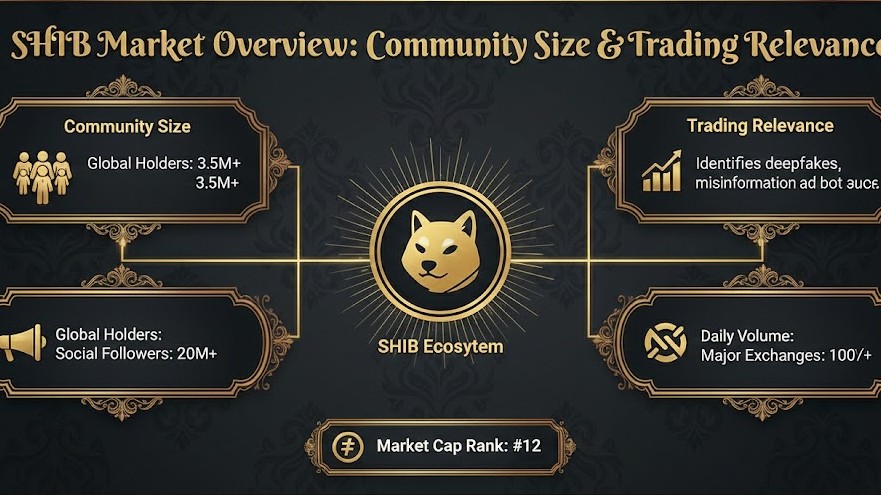
SHIB in 2026: Why It Still Matters Even When It’s Not Trending
SHIB is not just a meme. It is also a market behavior indicator. When meme coins heat up, retail risk appetite often rises. When meme coins cool down, traders often rotate to “utility” narratives like AI, infrastructure, or yield. That is why SHIB keeps appearing in analytics discussions. Santiment’s SHIB feed shows repeated coverage of whale transfers and exchange supply changes, which are the kinds of metrics traders use to gauge volatility.
So, even if DSNT is grabbing headlines, SHIB remains a reference point for the wider market mood.
Liquidity and Familiarity Keep SHIB Relevant
Familiar assets usually have deeper liquidity and more consistent trading venues. That makes them easier to enter and exit. It also makes them easier to analyze, because more data exists. Newer tokens can spike in attention, but they often cannot match the liquidity reality of established coins. That difference affects real users. When liquidity is thin, price can move violently on small orders. With more liquidity, moves are often smoother. So, even if attention shifts, SHIB’s market structure keeps it relevant.
Whale Activity Keeps SHIB on Analysts’ Dashboards
Large-holder behavior is one reason SHIB stays in the news cycle. Analytics platforms highlight moments when whale transfers increase, because that can precede volatility.
This does not guarantee price direction, but it signals activity. And activity is what analysts track. This is why a headline about DSNT does not automatically replace SHIB coverage. SHIB produces constant measurable signals, and measurable signals keep a token on the radar.
The Meme-to-Utility Debate Is Not New
Many tokens try to move from “meme” to “utility.” Some succeed. Many do not. The market often revisits this debate because it sounds logical: “utility should win.” But crypto is not only logic. It is also community, liquidity, and timing. So, a “utility narrative” can win attention for a while, then fade if usage does not follow. That is why the smart approach is balanced. Respect SHIB’s market role, while still tracking new utility claims carefully.
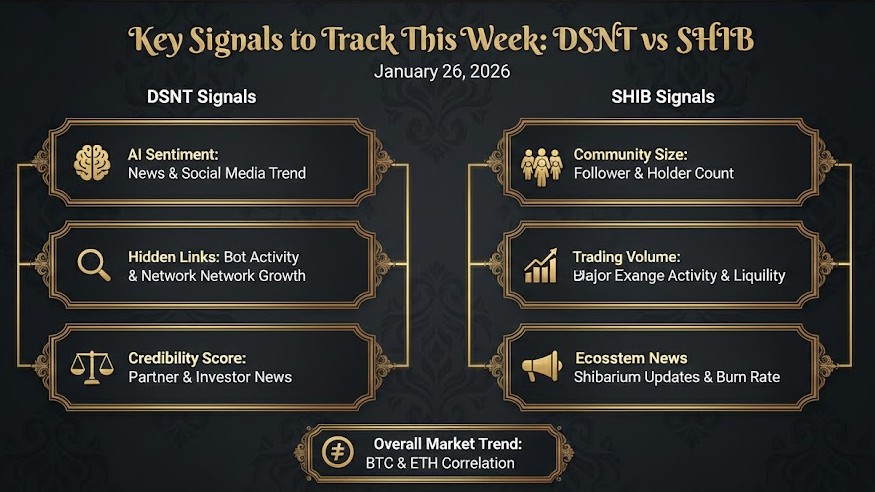
The Signals to Track This Week
If a story says “attention is shifting,” then it should come with measurement. The best measurements are the ones that are hard to fake. Social mentions can be bought. Articles can be sponsored. But certain on-chain signals, liquidity depth, and consistent product updates are harder to manufacture. This section gives you a simple scoreboard you can follow during the week. It does not predict prices. It helps you filter what is real, what is early, and what is mostly marketing.
Social Mentions: Look at Quality, Not Quantity
Raw mentions can mislead. A project can trend because a few large accounts post repeatedly, or because multiple sites syndicate similar content. Instead, watch the diversity of conversation. Organic attention looks messy: different voices, different opinions, different platforms. Manufactured attention looks repetitive: identical phrasing, extreme promises, and constant urgency. If DSNT’s attention comes mostly from promotional “huge return” framing, then treat it as marketing pressure until you see product proof and broader discussion.
On-Chain Basics: Holders, Transfers, and Concentration
On-chain data helps you check whether an asset is broadly held or tightly concentrated. A very small number of holders can mean the token is early, or it can mean you are looking at a look-alike contract.
Either way, concentration increases risk. It can amplify pumps and dumps. It can also create exit problems. If you track DSNT, track holder growth, transfer frequency, and whether activity expands across many wallets or stays clustered.
Product Proof: Updates, Access, and Real User Feedback
Utility tokens live or die by product delivery. A real AI tool should show ongoing development signals: updates, changelogs, documentation clarity, and user feedback that talks about features, not just price. DeepSnitch AI’s public materials present the idea and the whitepaper structure.
What matters next is consistency: does the tool improve, does it stay accessible, and do users report real workflows? That is the evidence that turns a narrative into adoption.
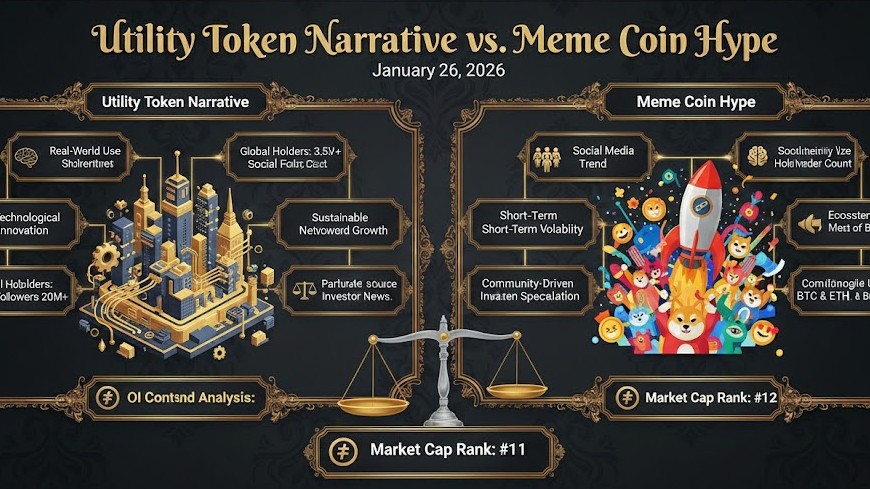
Why “Utility Tokens” Feel Strong in 2026
The “utility” storyline is powerful because it matches a desire many traders have: earning should come from usefulness, not from jokes. That desire gets stronger when markets are uncertain and people feel tired of random pumps. AI utility narratives are especially strong because they promise better decision-making. Some coverage pushes DSNT as a “best AI crypto” idea and mixes utility claims with aggressive upside language.
This is exactly why readers need a calm framework. Utility can be real, but utility claims must be tested.
Utility Is a Promise: The Proof Must Be Measurable
Real utility creates measurable value. It saves time, reduces risk, or improves results in a way users can feel. For an AI analytics tool, proof can look like: consistent alerts, fewer false signals, useful dashboards, and clear explanations. Without that, “utility” is just a marketing word. The good news is that proof is measurable. You can look for real users, real usage patterns, and real updates. The bad news is that many projects never reach that stage. So, treat utility as “potential,” not as guaranteed strength.
Why AI Tokens Attract Fast Money
AI tokens attract fast money because they feel modern and scarce. Also, many traders think AI will dominate the next decade, so they want early exposure. That belief can create sudden attention spikes. However, fast attention attracts fast scammers. It also attracts low-quality copycats. So, AI narratives amplify both opportunity and risk. The safer mindset is simple: move slowly, verify often, and never trust urgency. If the tool is real, it will still be real tomorrow.
What Would Confirm a Real Rotation Away From Memes?
A real rotation is not a single headline. It is a pattern. You would expect to see sustained attention, rising usage, and capital flowing into multiple utility projects, not just one token. At the same time, you would expect meme coins to cool for a longer period, not just a few days. For SHIB specifically, whale activity and exchange supply shifts can still keep it volatile, even during “utility weeks.”
So, confirmation comes from sustained evidence, not a short spike.
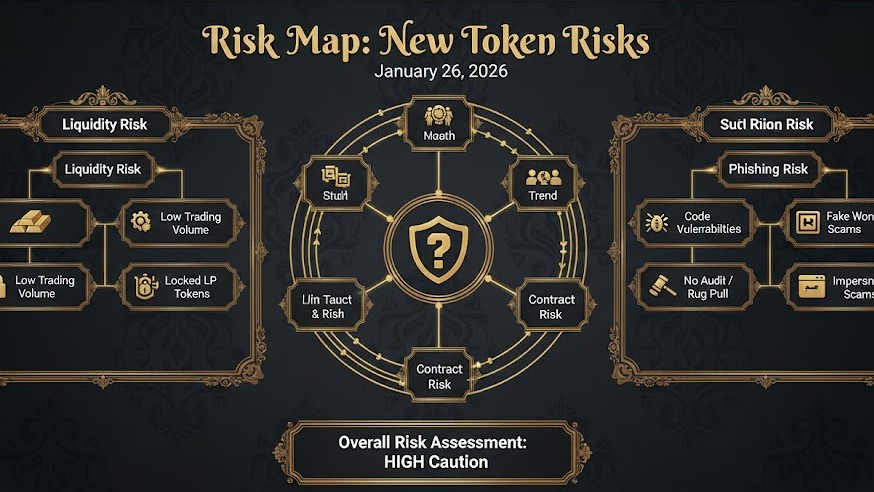
Risk Map: The Main Dangers in New Utility Tokens
A professional news article should be honest about risk. With early-stage tokens, the biggest risks are often not “price goes down.” The biggest risks are: thin liquidity, unclear contracts, confusing branding, and risky wallet interactions. Some promotional articles mix SHIB discussion with DSNT hype and extreme return language, which is a classic sign that readers should slow down.
This section gives a clear risk map so readers stay safe.
Presale Risk: Hype Is Strong, Protections Can Be Weak
Presales can be legitimate, but they are also where many problems happen. Information can be incomplete. Token distribution can be unclear. Refund policies can be vague. Also, presale marketing often uses urgency. DeepSnitch AI’s own site promotes presale access.
That makes verification more important, not less. If a reader cannot clearly confirm what they are buying and how it will trade later, then the safest choice is patience. Markets reward patience more often than they reward FOMO.
Liquidity Risk: “Attention” Without Markets Can Hurt
If markets are thin, spreads widen and slippage spikes. That turns small trades into big losses. It also makes price charts misleading, because small buys can move price dramatically. Some data pages indicate limited or no exchange listings for DSNT on that platform.
This does not prove DSNT has no markets anywhere, but it does highlight a common early-stage issue: liquidity can lag behind attention. For safety, liquidity reality matters as much as the story.
Wallet Risk: Approvals and Fake Links Are the Usual Attack Path
Many crypto losses come from wallet mistakes. Users connect to the wrong site, approve a malicious contract, or sign something risky. This risk is higher with trending tokens because scammers clone sites and push links in replies and DMs. The safest approach is boring but effective: use a separate wallet for experiments, keep balances small, and never approve unlimited spending unless you fully trust the dApp. A missed opportunity is cheap. A drained wallet is expensive.
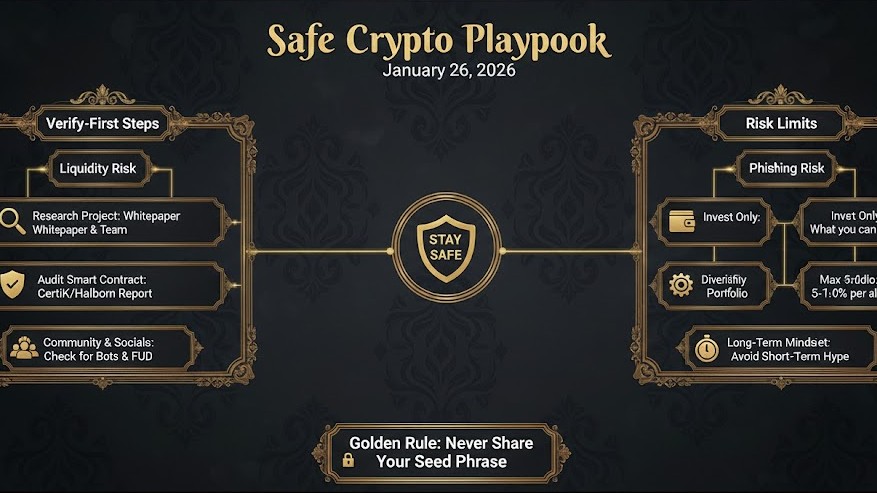
A Safe Reader Playbook: Follow the Trend Without Getting Burned
You can follow a trend without gambling on it. You can learn from it without rushing. This playbook is designed for readers who want to stay informed and safe. It avoids price calls. It focuses on evidence. It also keeps your time protected, because chasing every narrative can become exhausting. The key is to use a repeatable routine: verify identity, check market structure, check product proof, then decide what level of attention it deserves. This approach works for DSNT vs SHIB, and it works for the next narrative too.
The “Verify-First” Checklist
Start with identity. Confirm the official site and official documents match.
Then confirm chain and contract details from reliable sources. After that, check market structure: liquidity depth, holder spread, and whether activity is broad or concentrated.
Finally, check product proof: is there access, are there updates, and do users discuss features rather than only returns? This checklist is simple, but it stops most avoidable mistakes.
A Simple Way to Compare DSNT and SHIB Without Bias
Compare them on three axes. First: market maturity (liquidity and data availability). Second: narrative strength (what story is spreading and why). Third: measurable utility (does a product exist and is it used). SHIB scores high on maturity and constant monitoring signals.
DSNT may score higher on novelty and AI narrative appeal.
This keeps the comparison fair and clear, and it avoids emotional conclusions.
The Best Rule for 2026: Evidence Beats Excitement
Excitement is loud. Evidence is quiet. Evidence looks like: consistent updates, stable access, transparent documentation, and measurable activity that grows over time. Excitement looks like: countdown timers, extreme return claims, and constant urgency. Some coverage around DSNT uses very aggressive upside framing, which is a reminder to stay calm.
If a reader follows only this rule, they will avoid most traps in trending-token seasons.
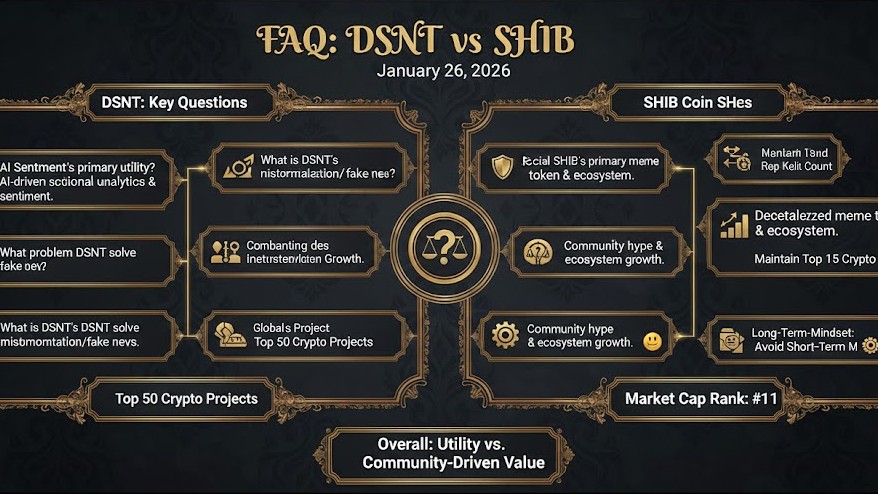
Quick FAQ: What This Means for Traders and Beginners
This final section answers the most common questions people search. It keeps the article easy to scan. It also helps readers leave with a clear plan, not confusion. The most important point is balance: DSNT attention may be rising in some feeds, while SHIB remains a major market benchmark with ongoing whale-focused signals.
So, the “new utility narrative” is worth watching, but it should be watched with a checklist and a calm mindset.
Did DeepSnitch AI “Really” Overtake SHIB in Attention?
It depends on what “attention” means in the headline. In many cases, it means DSNT is appearing in more promotional articles and trending lists, while SHIB is covered through ongoing market analytics and whale activity.
So, the safer interpretation is: DSNT is gaining headline share in certain channels, not that it has replaced SHIB’s overall market role. A real “overtake” would require sustained broad interest plus measurable participation.
Is This a Real Shift Toward Utility Tokens?
It could be, but only if utility produces real usage. A real shift leaves footprints: consistent product adoption, steady user growth, and durable liquidity. If those footprints do not appear, then it is likely a short narrative wave. AI narratives often arrive in waves because they fit what traders want emotionally.
So, the answer is not “yes” or “no.” The answer is “watch the proof.”
What Are the Two Most Important Signals This Week?
First: product proof. If DSNT is positioned as an AI tool, then access, updates, and feature-level feedback matter most.
Second: liquidity reality. If markets are thin, attention can be dangerous because exits become expensive.
If a reader tracks only these two signals, they will understand whether the narrative is becoming real or staying promotional.
Popular Articles