
BlackRock Tokenized Fund Now Collateral on Binance Late 2025
Binance now accepts a BlackRock tokenized fund as collateral, marking a leap for RWA adoption, deeper liquidity, and institutional crypto access in late 2025.
By Yaser | Published on November 15, 2025

What Happened — And Why This Headline Matters
In mid-to-late November 2025, Binance confirmed it has integrated BlackRock’s tokenized U.S. Treasury fund, BUIDL, as off-exchange collateral for institutional trading. In plain terms, qualified clients can keep yield-bearing BUIDL with a regulated custodian while unlocking trading lines on Binance. This is a practical bridge between Wall Street and crypto market structure. It reduces operational friction, preserves on-chain yield, and deepens prime-style access without constantly moving assets on-platform. Because the fund also expanded to BNB Chain, this step widens distribution and pushes RWA adoption from “pilot” to “plumbing.” For everyday readers, this means real institutions now have a cleaner, safer entry path.
What Exactly Is Being Accepted?
The collateral is BUIDL, BlackRock’s tokenized USD institutional liquidity fund, issued by Securitize and backed by short-dated U.S. Treasuries and cash equivalents. The token tracks a $1 net asset value and distributes yield on-chain to qualified purchasers. Accepting BUIDL as collateral lets institutions keep conservative exposure while accessing exchange liquidity. This is familiar in traditional finance (think: money-market funds as collateral) but new at this scale for crypto venues, especially when the fund is tokenized and transferable across compliant rails.
Why It’s Not “Just Another PR”
Unlike past pilots, this integration sits at the core of trading workflow: collateral, credit, and risk. By plugging a blue-chip tokenized fund into exchange collateral systems, Binance and partners turn tokenization into utility, not a demo. The path is simple: park BUIDL with approved custody, pledge it as collateral, trade spot or derivatives with reduced transfer friction. For readers, that means RWAs are no longer a headline; they are becoming the backstage machinery of liquidity and price discovery.
The BNB Chain Angle
BUIDL’s expansion to BNB Chain matters because network proximity lowers settlement steps for ecosystem tools, treasuries, and market-makers already active there. As more compliant investors interact with BNB Chain rails, bridges, and custodial workflows built for institutions, integrations can compound. That means more wallets, more reporting adapters, and more standardized APIs, all of which make institutional crypto less fragile and more repeatable.

How Off-Exchange Collateral Works
Off-exchange collateral lets you trade on an exchange without holding your assets on the exchange. Instead, a tri-party or similar arrangement recognizes the asset at a custodian and grants you trading credit lines. This cuts venue risk, streamlines netting, and removes needless transfers. When the asset is tokenized, eligibility checks, balances, and movements can be faster and more programmable. For BlackRock’s BUIDL, the appeal is clear: keep yield, keep custody comfort, and still access deep Binance liquidity. In short, the “pipes” now fit both TradFi controls and crypto speed.
Why Institutions Care
Institutional desks optimize for counterparty risk and capital efficiency. Moving cash in and out of venues is slow and operationally intensive. With off-exchange collateral, desks can allocate once and trade often. Add a tokenized fund that pays yield while pledged, and the carry improves versus idle cash. That alignment of yield, safety, and access is precisely what CIOs want before scaling. Hence, this single integration can influence how risk committees view crypto execution in 2026.
Why Crypto Natives Should Care
For crypto natives, this is more liquidity with fewer bottlenecks. Better collateral channels can smooth volatility clusters around big events, improve order-book depth, and reduce failed transfers during stress. As these rails mature, spreads can tighten and liquidation cascades may moderate because better credit plumbing reduces last-minute asset shuffles and panic withdrawals. Over time, healthier microstructure means fairer pricing for everyone, not only the biggest desks.
The Compliance Benefit
Off-exchange frameworks are easier to audit and segregate. Custodians can prove holdings, exchanges can prove limits, and participants can meet internal and regulatory controls for asset treatment. With BUIDL’s on-chain record plus traditional fund reporting, the paper trail is stronger than fragmented wallets and ad-hoc wire flows. That auditability is a prerequisite for pensions, insurers, and banks to scale exposure responsibly.

Why RWAs Just Leveled Up
Tokenization promised speed, programmability, and 24/7 rails, but critics asked, “So what?” This is the “so what.” A $2.5B+ tokenized fund becoming everyday collateral on the world’s largest crypto exchange is functional adoption, not a concept deck. It aligns incentives across managers, custodians, exchanges, and clients. Moreover, it standardizes how compliant yield instruments enter crypto liquidity without hand-built exceptions each time. As more money-market funds and short-duration note products follow, RWAs can become the quiet backbone of crypto credit.
Immediate Effects You’ll Notice
Expect more consistent depth on majors, faster institutional onboarding, and tighter operational cycles for market-makers. When desks can pledge yield collateral Monday through Friday and trade crypto 24/7, the seam between TradFi hours and crypto hours narrows. That means fewer awkward weekend liquidity holes and more robust hedging when macro headlines hit out of hours.
Knock-On Effects for DeFi
Once RWAs are reliably tokenized and widely held, DeFi protocols can consider safer base collaterals. Today, many depend on stablecoins and volatile assets. Tomorrow, a share-class of a tokenized Treasury fund could underpin conservative vaults, term repos, and cross-margin routing. The result could be lower systemic risk and broader user appeal for non-degenerate yields.
The Benchmark Effect
When the biggest asset manager’s tokenized fund becomes accepted collateral, peers take notice. Franklin Templeton, Goldman-BNY pilots, and others already push tokenization. A marquee exchange integration creates a benchmark peers can copy, compressing the time between “first integration” and “industry standard.” That is how infra shifts: quietly, then suddenly.

What Changes for Traders Right Now
For professional traders, the headline translates into cleaner credit lines and fewer operational hops. Instead of pre-positioning big cash balances on-venue, you can pledge BUIDL with custody partners and scale positions as needed. Retail users may not touch this setup directly, but they benefit from deeper books, tighter spreads, and smoother event-days when big players do not need to yank assets around. Less friction often equals fewer accidents.
Funding, Basis, and Slippage
As collateral improves, derivatives markets can reflect risk more cleanly. That may reduce extreme funding spikes and odd basis gaps born from collateral scarcity. With healthier collateral channels, makers can quote tighter perps and options, lowering end-user slippage. During high-volatility windows, the difference between orderly and disorderly comes down to credit rails; this move sits squarely in that category.
Listings and Cross-Margin
Exchanges can design cross-margin frameworks that recognize BUIDL alongside stablecoins and cash. That flexibility allows multi-asset strategies without clumsy asset shuttling. Risk engines can account for BUIDL’s stability and haircut it prudently, letting traders post conservative collateral for aggressive instruments. The result: capital works harder with less operational heat.
Weekend and Holiday Dynamics
TradFi is closed on weekends; crypto never sleeps. With tokenized funds as recognized collateral, the handoff between Friday close and Monday open is less dramatic. Desks can maintain posture through the weekend without over-funding the venue. That reduces forced moves and weird prints that scare casual users and headline writers.

What Changes for Builders and Projects
Builder playbooks can now assume “institutional-grade” collateral exists in the ecosystem. That means new prime-broker-style services, better treasury ops, and safer B2B workflows for wallets, OTC desks, and analytics. It also means that SDKs and APIs can standardize around RWA eligibility checks, haircut tables, and reporting endpoints. In other words, product teams can build on top of collateral that behaves like a trustworthy primitive.
Treasury and Runway Management
Projects holding stables may consider rotating part of treasuries into yield-bearing RWAs to extend runway without speculative risk. If those positions can also be pledged for working capital on exchanges, teams gain flexibility without round-tripping funds constantly. Clear policies, board approvals, and custody controls still matter—but the toolkit is richer than last cycle.
Safer On-Ramp Patterns
User flows can embed “earn while parked” defaults for institutional clients: funds come in, settle into BUIDL via approved intermediaries, and are trade-ready without sitting idle. This mirrors TradFi prime models that clients already understand. Fewer unknowns mean shorter sales cycles for B2B crypto products.
Reporting and Compliance UX
Because BUIDL carries traditional fund reporting plus on-chain attestations, finance teams can produce statements that meet auditors halfway. Clean month-end closes and predictable NAV accounting encourage bigger firms to sign off on pilot budgets. Friction in paperwork—not only technology—has blocked adoption; this move addresses both.
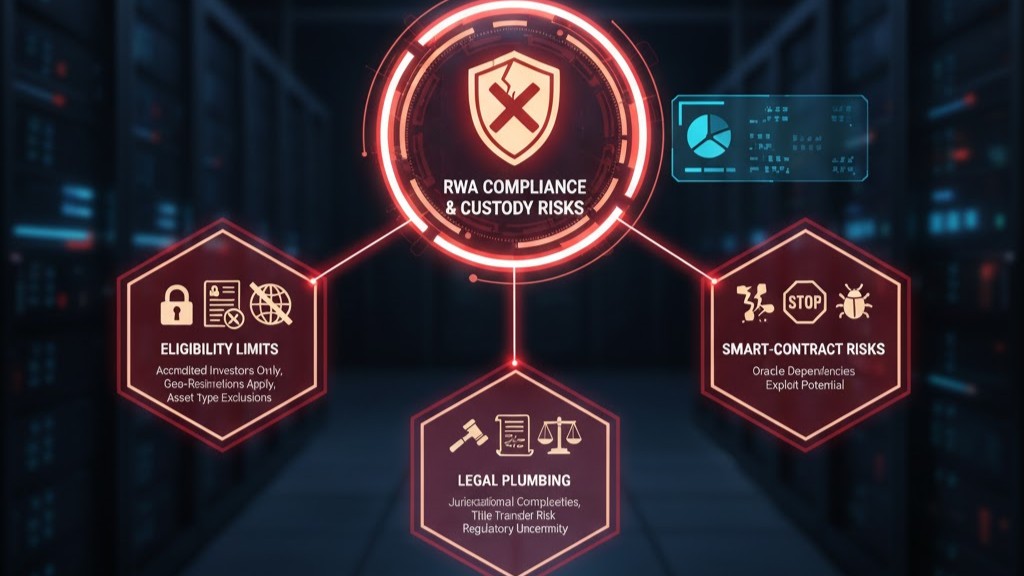
Risks, Limits, and What This Does Not Solve
This is progress, not a panacea. Off-exchange collateral frameworks depend on reliable custodians, clear legal agreements, and robust failure procedures. Tokenized funds carry eligibility rules and are available only to qualified investors. If macro turns risk-off, credit appetite can still shrink even with better collateral. And of course, exchange, counterparty, and operational risks never go to zero.
Eligibility and Access
Retail users in many regions will not directly access BUIDL due to investor qualifications. That may create a two-tier market where institutions enjoy better rails. The hope is that improvements at the top trickle down via tighter spreads and steadier books, benefiting everyone indirectly, even if not everyone can pledge the fund themselves.
Custody and Legal Plumbing
Tri-party and segregated custody arrangements require painstaking legal choreography. Misalignment between jurisdictions, bankruptcy regimes, and recognition of tokenized claims can introduce edge cases. Institutions will demand tested playbooks for default scenarios. Until those are proven in court or resolved via regulation, some committees will size cautiously.
RWA Smart-Contract Surface
While BUIDL’s backing is conservative, its token rails still rely on smart contracts, bridges, and oracles. Those add software risk that treasuries and auditors must track. Defense-in-depth—code audits, monitoring, and well-rehearsed incident response—remains essential, particularly as volumes climb.

Signals to Watch Next
Readers should focus on evidence, not vibes. Track volumes of pledged collateral, number of eligible custodians, and growth in institutional accounts using the framework. Watch whether other tokenized funds are admitted and whether more exchanges copy the model. Finally, monitor spreads and depth during busy windows; if microstructure improves, this is working.
More Funds, More Networks
If competitors—Franklin Templeton, Goldman/BNY, Fidelity—see traction, they will race to list their tokenized funds as eligible collateral on major venues. Multi-network share classes (Ethereum, BNB Chain, others) could emerge, guided by where clients operate most. That diversification would make the rail more resilient.
DeFi Integrations
Expect conservative DeFi vaults to pilot BUIDL-style collaterals for institutional pools, with strict KYC and withdrawal rules. Bridges and L2s may integrate attestations so risk engines can verify eligibility on the fly. If those integrations scale, the RWA meme finally becomes an RWA standard.
Policy and Accounting Clarity
Watch for accounting guidance on tokenized fund treatment and for regulators to bless more off-exchange collateral structures. The more clarity we get, the bigger the checks become. Standards bodies and industry groups will likely publish templates that compress onboarding from months to weeks.

For GrindToCash Readers
This is one of those quiet infra milestones that changes everything downstream. BlackRock’s tokenized fund being accepted as collateral on Binance takes RWAs from theory to throughput. It deepens liquidity, simplifies risk, and gives institutions a credible path into 24/7 markets without abandoning compliance comfort. For everyday users, the benefits show up as steadier books, cleaner execution, and broader adoption over time. For builders, the message is clear: design for a world where real-world yield and on-chain liquidity finally meet—simply, safely, and at scale.
How to Use This Insight Today
If you are a trader, pay attention to depth and spreads around macro events; improved collateral rails can change the playbook. If you are a builder, explore treasury and onboarding flows that assume tokenized, yield-bearing base assets. If you are a long-term investor, track adoption metrics and copy-cat integrations—those will separate a headline from a new normal.
Final Word
At GrindToCash, we cover the changes that move markets and shape behavior. This one does both. We will keep watching how volumes, custody partners, and competitor responses evolve—and we will translate the noise into clear, practical takeaways you can actually use.
Popular Articles