BitGo IPO Bombshell: Crypto Custody Enters a New Era
BitGo’s public market debut is more than a headline. It is a signal. Crypto custody is moving from a “back-office” service to a core layer of finance. When a custody firm lists shares on a major exchange, it tells institutions, regulators, and builders that the plumbing of crypto is becoming mainstream. This article breaks down what happened, why it matters, and what readers should watch next—without hype, and with clear, practical takeaways you can use.
By Yaser | Published on January 25, 2026

The IPO Snapshot: What Happened and Why It Matters
BitGo’s IPO story is simple on the surface. Shares were offered to the public. The market reacted fast. And the company’s valuation became a talking point across crypto and traditional finance. But the real story is deeper. IPOs set a reference price for an entire sector. They also reveal what investors value right now: revenue quality, compliance, and durability. If you want the bigger picture, connect this to the “infrastructure cycle” in crypto, where custody, settlement, and regulated rails start to matter more than hype narratives.
Pricing, Day-One Action, and the Valuation Headline
IPO pricing matters because it shows what professional buyers are willing to pay at launch. A strong opening can attract more attention. A weak one can cool an entire market. BitGo’s valuation became the main headline because it frames how Wall Street “prices” custody and compliance in crypto. Still, first-day moves can be noisy. They are driven by limited supply, media attention, and short-term demand. What matters more is how the stock behaves after the first week and after the first earnings report.
What BitGo Actually Does
Crypto custody is not just “holding coins.” It is secure storage, controlled access, audit trails, and policy rules that match how institutions operate. Many custody setups rely on multi-signature controls, approvals, and segregated wallets. That structure is designed to reduce single-point failure. BitGo also sits near trading and settlement workflows, where clients want safe movement of assets, not just cold storage. If you are new to this, start with the basics of wallets and custody differences.
Why This IPO Is a “Sector Signal,” Not Just Company News
A custody IPO tells the market that “boring but essential” services can be investable. That matters because crypto is maturing. Big money prefers regulated, measurable business models. Custody firms can look like picks-and-shovels plays, similar to how payment processors support e-commerce. This also pressures competitors to raise standards. It pushes the ecosystem toward better reporting, clearer risk disclosures, and more robust security practices. If you follow market cycles, this fits the pattern: infrastructure grows when speculation cools.
Why Crypto Custody Is Becoming the Center of Gravity
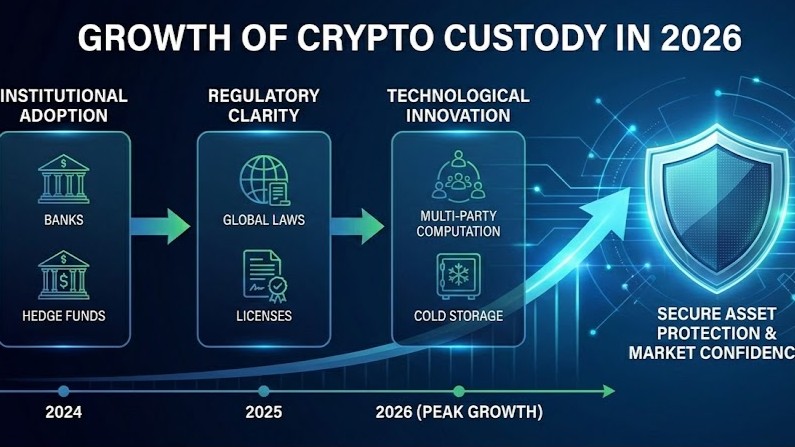
Custody used to feel optional. Many people kept coins on exchanges or in personal wallets without thinking much about governance and risk. But the market has learned hard lessons from hacks, insolvencies, and compliance shifts. Institutions want rules. Regulators want accountability. And users want safety without complexity. That combination drives custody demand. This is why “custody” can be a long-term theme, not a short-lived trend. Tie this to security education and platform choice, because custody choices shape everything else you do in crypto.
Institutions Want Compliance, Controls, and Clear Accountability
Institutions cannot operate like casual traders. They need approvals, reporting, and separation of duties. They also need a regulated counterparty that can pass audits. Custody providers offer structured access controls, standardized policies, and documented operational processes. That is valuable because it reduces operational risk. It can also unlock participation from funds, family offices, and corporate treasuries that need strict governance. If you want to understand the “why,” study how risk management works in traditional finance and how it translates to digital assets.
Custody vs Exchange Risk: The Lesson the Market Keeps Relearning
Many users treat exchanges as wallets. That can work until it doesn’t. Exchange risk includes operational failures, regulatory freezes, and counterparty issues. Custody is not perfect, but it is built to reduce certain risks through segregation, policy controls, and security architecture. The key is understanding what you are buying: convenience, control, or compliance. A simple rule helps: if you plan to hold long-term, prioritize security and custody design. If you trade daily, prioritize liquidity—but never ignore risk.
Custody as “Picks and Shovels” for the Next Crypto Wave
When a sector matures, the winners are often infrastructure providers. They benefit whether prices go up or down, as long as activity continues. Custody firms can earn through service fees, platform usage, and institutional workflows. This is why custody is sometimes compared to “plumbing.” You do not see it when it works, but everything breaks when it fails. For readers, this matters because it shifts focus from meme narratives to durable systems. That helps you filter news and choose learning priorities.
How BitGo’s Business Model Works
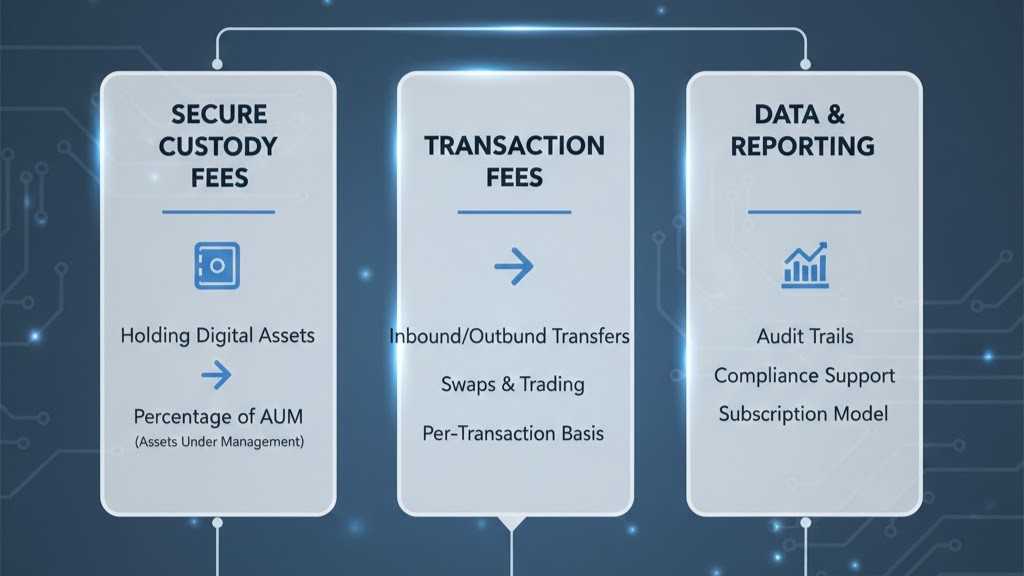
Understanding the business model helps you judge whether an IPO story is strong or fragile. Custody businesses are often built on recurring fees, institutional contracts, and high trust. But not all revenue is equal. Some sources are stable. Others depend on market volume and risk appetite. This section explains typical custody revenue streams in simple language. It also highlights why compliance can be a competitive advantage, not a cost center. For readers, this is the bridge between “headline news” and “real-world business.”
Custody Fees and “Assets Under Custody” (AUC)
Custody revenue often scales with assets held. More assets under custody usually means more fee potential, but fee structures can vary. Some clients pay basis-point style fees. Others pay flat platform fees plus add-ons. The key point is stability: custody is closer to recurring revenue than trading fees. But it is not guaranteed. Clients can move assets out, especially if competitors offer better terms or better features. This is why AUC trends and client concentration matter when assessing a custody firm.
Trading, Settlement, Staking, and Other “Prime” Services
Custody firms often expand into services around custody. Think trading access, settlement rails, reporting dashboards, and sometimes staking support. These services can increase revenue per client, but they also add complexity and risk. For example, staking can introduce slashing risks and operational dependencies. Trading workflows introduce market and execution considerations. The smart way to read these expansions is to ask: do they strengthen the core custody offering, or do they distract from it? The answer shapes long-term durability.
Compliance, Licensing, and the “Trust Layer” Advantage
In crypto, trust is a product. Compliance can be part of that product. When a custody provider invests in licensing, audits, and operational controls, it can attract higher-quality clients. It can also reduce the chance of catastrophic events. That does not eliminate risk, but it changes the risk profile. For readers, this is an important mindset shift. The strongest companies in the next phase may be those that do unglamorous work: reporting, controls, and secure operations.
What This IPO Signals for the 2026 Crypto Market
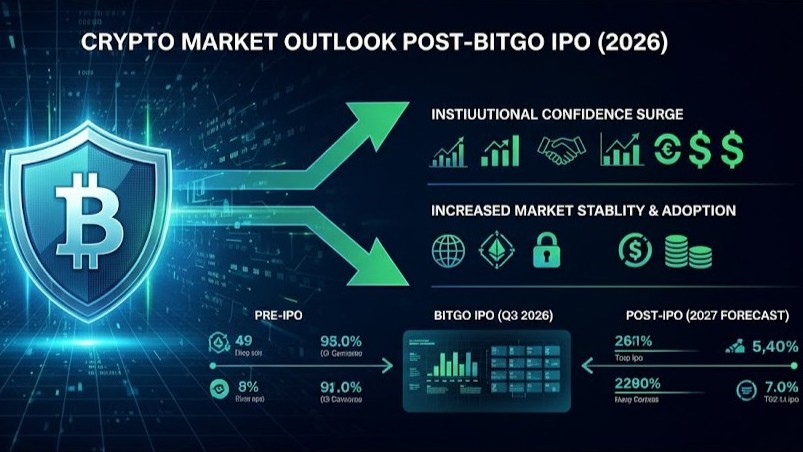
IPO timing matters. It reflects risk appetite. It also reflects confidence in the ability to meet public market expectations. BitGo’s IPO is being watched because it may open the door for more crypto companies to list. But this is not only about a pipeline of listings. It is about where capital is flowing. If public investors reward custody and infrastructure, builders and private markets may follow. This can reshape which crypto narratives get funded next. Follow it like a trend signal, not like a single event.
The “Crypto IPO Window” and What Reopens It
Markets go through windows. Sometimes IPOs are active. Sometimes they are frozen. A successful debut can thaw sentiment and encourage others to file. But the window depends on more than one stock. It depends on macro conditions, regulation, and investor appetite for risk. If you track this properly, watch what happens after the first quarterly results. Watch analyst coverage. Watch whether institutions begin to treat crypto infrastructure as a standard allocation category. These are stronger signals than day-one price movement.
Macro Pressure Still Matters: Rates, Liquidity, and Risk Appetite
Even the best crypto company cannot escape macro conditions. Interest rates, liquidity conditions, and global risk sentiment influence valuations and flows. When liquidity is tight, investors demand stronger cash flows and clearer fundamentals. That often benefits infrastructure over speculative tokens. But it can also slow growth. For readers, the takeaway is practical: do not read crypto news in isolation. Pair every major crypto headline with a quick macro check. That habit improves decisions and reduces emotional trading.
Competitive Ripple Effects: Standards Rise, M&A Becomes Plausible
A public company raises the bar. It must report financials. It must face scrutiny. Competitors may respond by improving transparency, security, and product depth. Over time, this can trigger consolidation. Smaller firms may merge or get acquired to compete. For the industry, that can be healthy if it reduces weak operators. For readers, it means you should pay attention to security practices, proof-of-reserves claims, and custody architecture when choosing platforms. Competition is not only about fees; it is about safety and reliability.
The Investor Watchlist: What to Track Without Guessing Prices
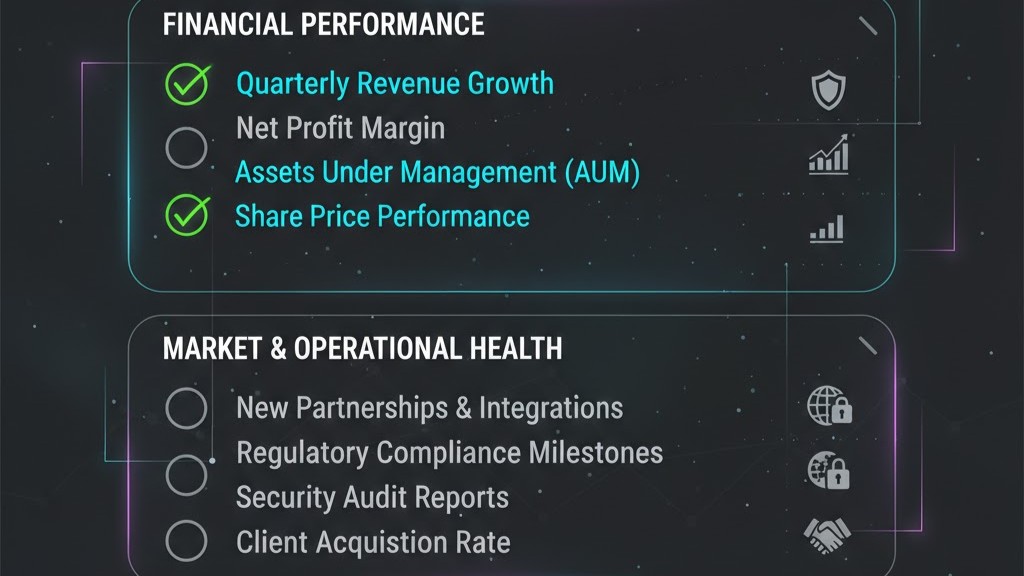
This section is not about telling anyone to buy or sell. It is about helping readers track reality. Public companies publish data. That data becomes a scoreboard. If you want to understand whether a custody firm is succeeding, focus on a few measurable areas: revenue quality, client growth, risk controls, and margin trends. Avoid the trap of reading headlines only. Headlines are loud. Metrics are honest. If you want a simple system, create a monthly checklist and review it after each earnings release.
Key Metrics: Revenue Mix, Margins, and Client Concentration
Revenue mix tells you what the company relies on. Custody fees can be steadier. Trading-related revenue can be more cyclical. Margins show efficiency and pricing power. Client concentration shows fragility. If a small number of clients represent a large share of assets or revenue, the business is more sensitive to withdrawals. Simple metrics can prevent overconfidence. They help you separate a strong story from a fragile one. Track changes over time, not single-quarter noise.
Risk Factors: Security, Counterparty Exposure, and Operational Complexity
Custody is a security business. One major incident can destroy trust. That is why readers should pay attention to disclosures about security practices, insurance coverage, and operational incident history. Also watch counterparty exposures, especially if a custody firm expands into lending or complex yield products. Complexity increases risk. Simple is safer. If you see too many unrelated product lines, ask why. A focused custody strategy often indicates maturity.
Lockups, Insider Selling, and Dilution: The Post-IPO Reality
After an IPO, there are structural factors that affect price behavior. Lockup expirations can add supply. Insider selling can be interpreted in multiple ways, but it is always worth tracking. Future share issuance can dilute existing holders. None of this is “good” or “bad” on its own. It is just how public markets work. The smart approach is to know the schedule and avoid being surprised. If you follow only headlines, you will miss these mechanics.
Practical Takeaways for Everyday Crypto Users
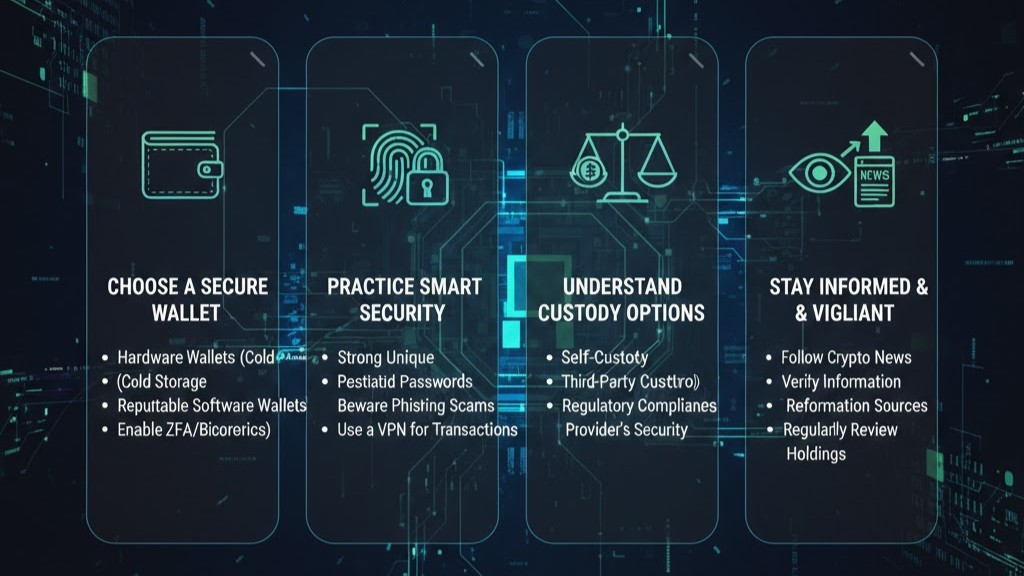
Big financial news can feel distant. But custody themes affect normal users too. They influence how exchanges operate, how wallets integrate, and how regulations shape user experience. The practical goal is simple: protect your funds and reduce avoidable mistakes. That means improving security habits, choosing platforms deliberately, and understanding what “custody” means in real life. This section gives actions you can apply today, even if you never touch a stock ticker.
A Simple Security Upgrade Plan You Can Do This Week
Start with a basic security reset. Use strong unique passwords. Turn on two-factor authentication with an authenticator app. Review device security and browser extensions. Then separate holdings: keep long-term assets in a safer setup, and keep only what you need on exchanges. This is not paranoid. It is standard. If you want a step-by-step plan, follow a checklist approach and do one improvement per day. Security is not one decision; it is a habit.
Custody Choices: Exchange, Hardware Wallet, or Multi-Sig
The best custody option depends on your behavior. If you trade often, you may need exchange liquidity. If you hold long-term, non-custodial storage can reduce counterparty risk. For larger holdings, multi-signature setups can add protection. But simplicity matters too. A complex setup you cannot manage can be riskier than a simpler one you use correctly. The goal is balance. Learn the difference between custodial and non-custodial, and choose intentionally.
Learn the “Custody Stack”: Wallets, Keys, Seed Phrases, Recovery
If you want real independence in crypto, you must understand keys and recovery. A seed phrase is not a password. It is the master key. Losing it can mean losing access forever. Sharing it can mean getting drained. Simple rules help: never store seed phrases in cloud notes, never share them, and use offline storage. Also plan recovery. If something happens to your device, can you restore safely? This is the most important “basic” topic in crypto.
How This Creates New “Earning” Angles (Safely, Not Hype)
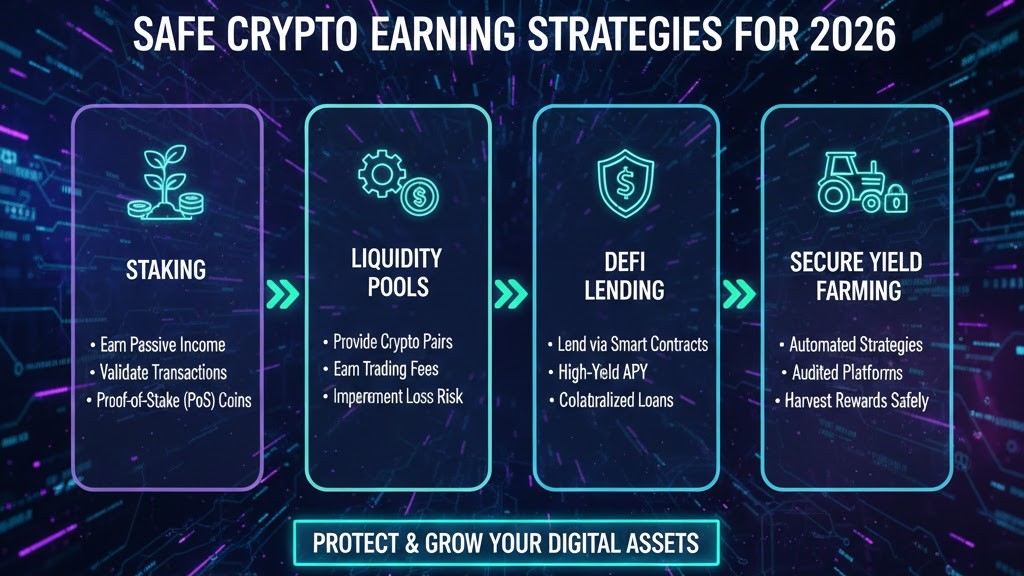
When infrastructure grows, new earning models appear. But many are time-wasters or risky traps. The safe approach is to focus on predictable value: education, tools, and low-risk strategies. Custody growth also increases interest in proof-of-reserves, audits, risk dashboards, and compliance-aware services. That creates demand for guides and comparisons. It also increases demand for safer yield education, because many users chase yield without understanding risk. Use this moment to build content and habits that still matter next year.
Content Angles That Match What People Search Right Now
People search for clarity during big events. They ask: “What is crypto custody?” “Is my exchange safe?” “What does an IPO mean for crypto?” That creates opportunities for practical guides and comparisons. Build content that answers specific questions with simple steps. Avoid vague promises. Use checklists and examples. If you publish earnings content, connect it to safety: how to earn without exposing your funds to unnecessary counterparty risk. This approach tends to perform well long-term and stays ad-friendly.
Yield, Staking, and Restaking: Where Readers Need Real Warnings
Yield topics get clicks. They also create losses when explained poorly. If you cover staking or restaking, be direct about risks: slashing, smart contract risk, platform risk, and liquidity lockups. Explain the difference between APR marketing and real net returns after fees. Add safety filters like “avoid yields you cannot explain” and “avoid platforms you cannot verify.” This kind of content builds trust and reduces harm. It is also better for long-term audience retention.
The Best “Earn” Strategy Is Often Boring: Consistency and Risk Control
Many people want fast gains. Most of the time, the smarter move is consistency. A small weekly routine—saving, learning, using safe tools, and avoiding scams—beats chasing every trend. Teach readers a system: how to assess a platform, how to set risk limits, and how to protect capital first. If you want to include earning methods, focus on low-risk steps like stablecoin risk education, careful staking basics, and security-first platform selection. Boring is often profitable because it avoids catastrophic mistakes.
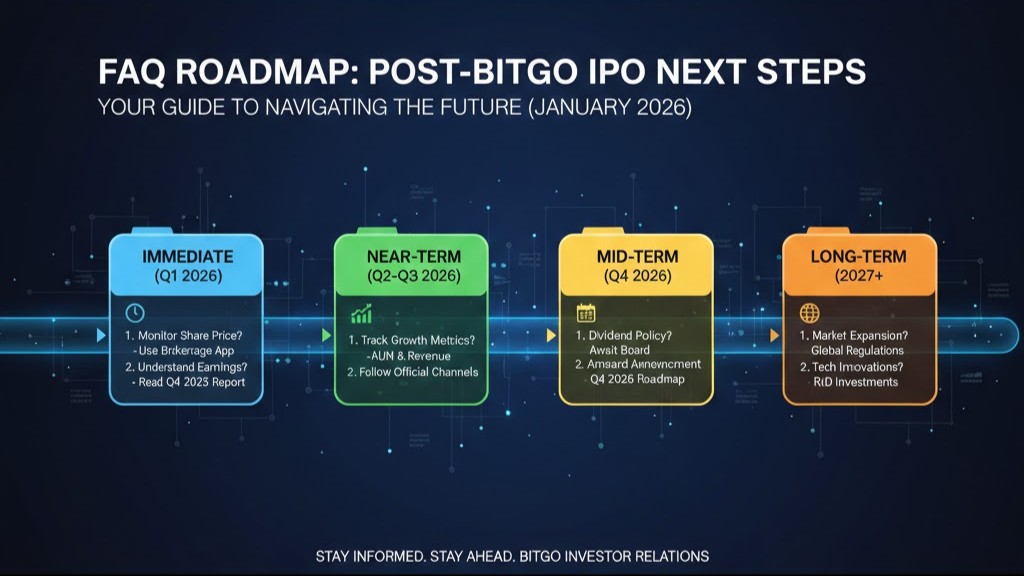
FAQ and Next Steps: What to Watch After the Headlines
The first week after an IPO is only the beginning. The real story develops over months: earnings reports, guidance, regulatory updates, and competitive shifts. This final section answers common questions and gives a simple “next steps” plan. The goal is to keep readers informed without overwhelming them. Save this as a reference. Return to it after the first earnings call. And when the next crypto IPO files, compare it against the same checklist. Consistency in how you evaluate news is a superpower.
What Is Crypto Custody, and Why Is It Different From a Wallet?
Crypto custody means secure storage and controlled access to digital assets, often managed by a third party. A wallet can be custodial or non-custodial. In non-custodial wallets, you control the keys. In custodial systems, a provider holds the keys or controls access under strict policies. Both have tradeoffs. The key is understanding your risk: self-custody reduces counterparty risk but increases personal responsibility. Custodial solutions can add governance and support but add trust dependency.
Is a Custody Stock a “Bitcoin Proxy”?
Not exactly. A custody company can benefit from higher crypto activity, but its revenue depends on business factors like client growth, fee structure, competition, and regulatory costs. Crypto prices matter, but they are not the only driver. Treat it like a company first, and like a crypto narrative second. That means tracking fundamentals: revenue, margins, risk controls, and customer mix. If you want a quick mental model, compare it to how payment companies benefit from commerce without directly being the currency.
What Should Readers Watch Next
First, watch the first quarterly earnings report and the guidance. Second, watch for regulatory signals that affect custody standards, audits, and capital requirements. Third, watch the competitive response: new products, pricing changes, partnerships, and security disclosures. This three-step plan keeps you grounded. It prevents overreacting to headlines. It also helps you spot real trend shifts early. If you want to go deeper, keep a short “news log” and link each event to an action or a learning task.
Popular Articles