How to Farm January 2026 Airdrops Safely (Guide)
Airdrop farming can be a real way to earn tokens, but only if you treat it like a system. Most people fail because they rush, click unknown links, and mix wallets. This guide focuses on safety and consistency. You will follow a weekly routine that is simple, repeatable, and realistic. You will also learn how to filter scams, protect your wallet, and avoid wasting time on low-quality tasks.
By Yaser | Published on January 25, 2026

Build a Safe Setup Before You Touch Any Airdrop
Before you do any tasks, you need a clean system. This step is boring, yet it is the most important step. A good setup protects your main funds, reduces your stress, and makes your weekly routine faster. Also, it helps you track what you did and why you did it. That is important because airdrop farming is often about small actions over time, not one big move. If you start with chaos, you will end with mistakes. So, first build the foundation, then you can farm with confidence.
Use a Dedicated Airdrop Wallet (Never Your Main Wallet)
Create a separate wallet that you use only for airdrop tasks. Keep your main wallet clean and untouched by new dApps. This separation matters because approvals can be dangerous, and some sites are built to trick users. When you keep a dedicated wallet, you limit the worst-case damage. Also, you can track your activity more easily, because all farming actions happen in one place. In addition, it becomes simpler to revoke permissions later. Finally, it helps you build a habit: “main wallet is for holding, airdrop wallet is for experiments.”
Keep Wallet Hygiene: Low Balance, Clear Labels, Clean Devices
A safe farming wallet should stay small. Only keep enough for gas fees and small test actions. That way, even if something goes wrong, your loss is limited. Also, label your wallets clearly in your wallet app, because confusion causes mistakes. At the same time, keep your device clean. Use a separate browser profile for crypto, avoid unknown extensions, and update your system regularly. These steps sound simple, yet they prevent most “I got drained” stories. Because in many cases, the attacker wins through distraction, not through advanced hacking.
Set Basic Security Rules You Never Break
Make three rules and follow them every time. First, never share your seed phrase, ever. Second, never sign random messages if you do not understand the meaning. Third, never rush because of “limited time” pressure. Scams rely on urgency. A real project can handle questions and verification. Also, use strong passwords and 2FA for your email, because email is often the real weak point. If someone controls your email, they can reset many accounts. So, protect the basics, and your airdrop routine becomes much safer.
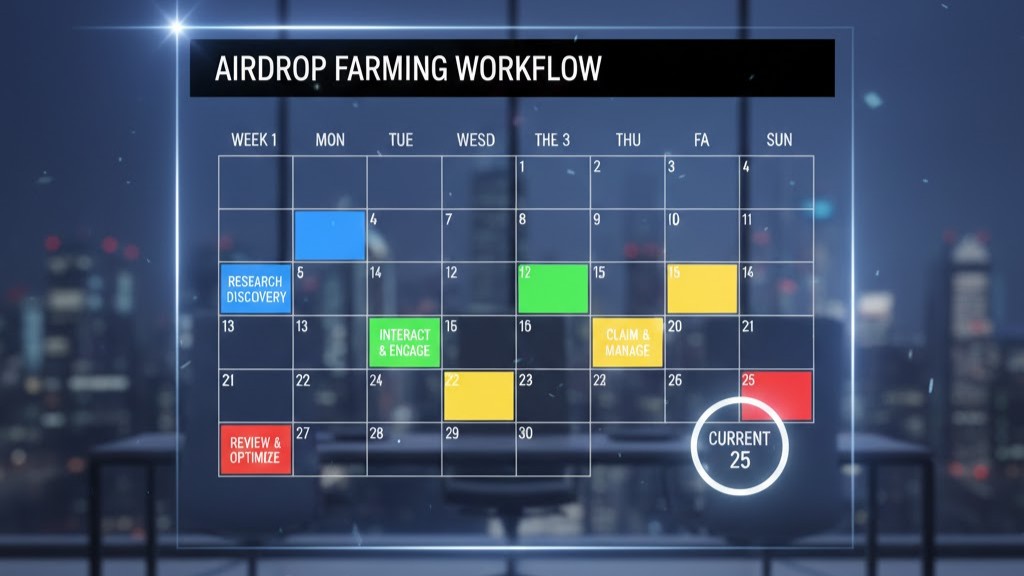
Define Your Weekly Routine: The 7-Day Airdrop Workflow
A weekly routine saves time because it removes decision fatigue. Instead of thinking every day, you follow a plan. Also, it reduces risk because you always verify first and interact later. Most importantly, a routine helps you stay consistent. Airdrops often reward steady users who show real behavior across weeks. But consistency does not mean doing everything. It means doing a small set of high-quality actions repeatedly. The workflow below is designed for January 2026. You can repeat it each week with small changes based on market conditions.
Monday: Discovery and Shortlisting (No On-Chain Actions)
Use Monday for research only. You collect candidates and build a shortlist. Do not connect your wallet yet. Start by checking official project announcements, developer updates, and credible sources. Then write short notes: what the project does, what chain it uses, and what tasks are realistic. After that, cut your list hard. Remove anything that looks vague, new with no product, or full of hype with no details. This approach helps because the biggest danger is not missing an airdrop. The biggest danger is interacting with trash projects.
Wednesday: Controlled Activity (Small, Real Interactions)
Midweek is for small, controlled actions. You do one to three tasks per project, not ten. For example, you might bridge a tiny amount, make a small swap, or interact with a test feature. Keep it minimal and consistent. Also, track every action in your notes, because memory becomes unreliable after a few weeks. Furthermore, avoid repeating useless actions that look like spam. Many projects filter sybil behavior, so “too many low-quality transactions” can hurt you. Therefore, choose meaningful actions that look like real usage, not noise.
Sunday: Cleanup and Review (Revoke, Archive, Improve)
Sunday is for cleaning. You review what you did, what worked, and what felt risky. Then you revoke old approvals you no longer need. You also close tabs, archive bookmarks, and update your shortlist for the next week. This step protects you because approvals can stay active even when you stop using a dApp. In addition, review your spending. If fees are too high, adjust your plan. If a project looks dead, drop it. This weekly “reset” keeps your system safe and keeps your routine sustainable.
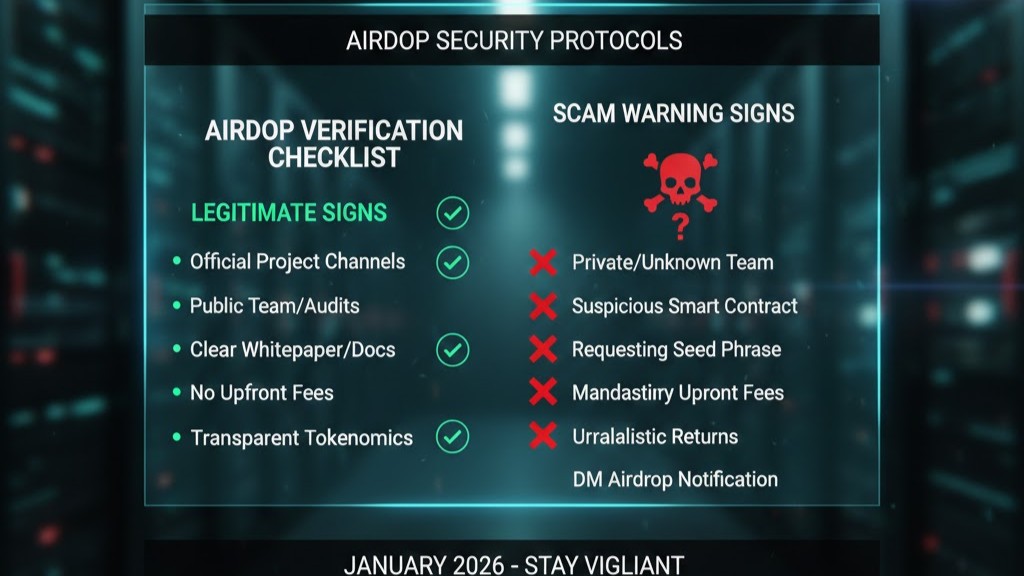
How to Verify Airdrops and Avoid Scams Like a Pro
The airdrop world is full of bait. So your job is to verify before you trust. Verification is not one step. It is a chain of checks. If any check fails, you walk away. Also, you should assume that attackers will imitate real brands, copy design, and use similar names. Therefore, you must rely on official sources and consistent signals, not on “looks legit.” This section gives you a verification checklist that readers can follow quickly. It also stays ad-safe because it focuses on security and education.
Verify the Official Sources (Website, Social, Docs)
Always start from a trusted official announcement. Then confirm the website domain matches that announcement. After that, cross-check the documentation and the team communication style. If the website is new, thin, or full of marketing claims, be careful. Also, check whether the project has real developer activity and real product updates. Strong projects explain their roadmap clearly and do not hide basic details. Meanwhile, scammers often push you to connect immediately. So, slow down. A legitimate project will still be there tomorrow. Urgency is a red flag, not a feature.
Spot Red Flags: “Connect Wallet Now”, Fake Claims, Paid Hype
Scams often use the same patterns. They promise guaranteed rewards. They show fake screenshots. They copy logos. They buy engagement. They also push a “claim now” message with a countdown timer. Another common trick is asking you to sign a message that looks harmless but actually grants control. Therefore, treat every “free money” message with suspicion. Also, never send funds to “activate” a claim. A real airdrop does not need your deposit to pay you. If a project asks for money first, that is not an airdrop. That is a trap.
Protect Yourself When You Must Interact (Least Privilege)
Sometimes you will need to connect a wallet. When you do, follow the least-privilege rule. Use the dedicated wallet. Approve only what you must. Avoid unlimited token approvals when possible. If the dApp asks for broad permissions, stop and rethink. Also, avoid signing messages you do not understand, especially if they mention “setApprovalForAll” or similar powerful functions. If you are unsure, step back and research. It is better to miss one possible airdrop than to lose your wallet. That is the simple logic that keeps people safe.
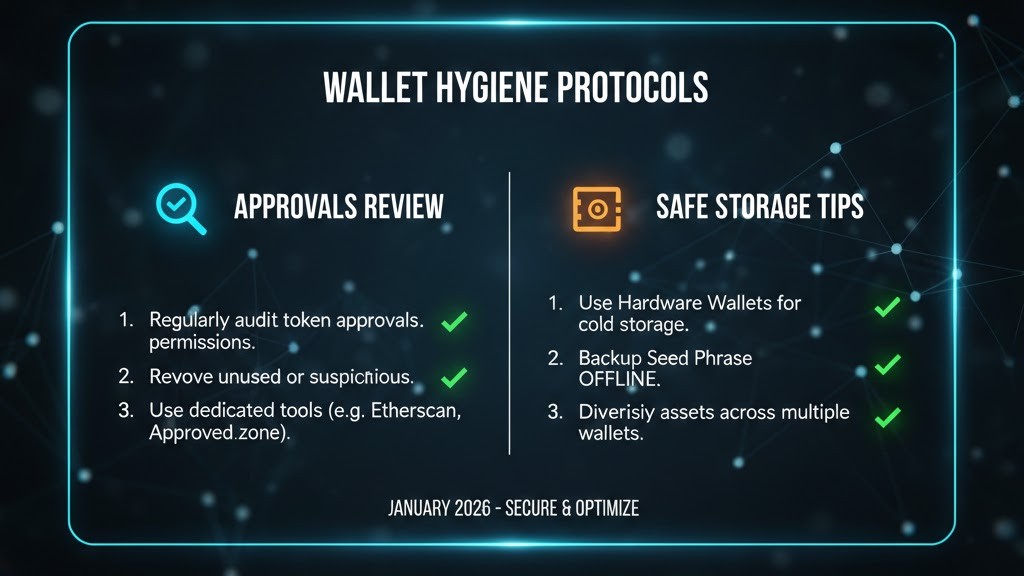
Wallet Hygiene: The Small Habits That Prevent Big Losses
Many guides talk about “strategy,” but they ignore hygiene. In reality, wallet hygiene is your real edge. Because if you lose access, nothing else matters. Hygiene means simple habits: separate wallets, track approvals, update security, and keep your routines clean. Also, it helps you reduce stress. When you know your system is safe, you can focus on research and consistency. This section is practical and friendly for beginners. It also supports long-term trust, which matters for returning visitors and stable traffic.
Manage Approvals and Permissions Regularly
Token approvals are like leaving your house keys with strangers. You may trust them today, but you may regret it later. Therefore, review and revoke approvals weekly. Do it on Sunday during cleanup. Also, avoid approving unlimited amounts unless it is a trusted, long-term tool you use often. Many losses happen weeks after the user stopped using a dApp, because the approval remained active. So, treat permissions as temporary, not permanent. This one habit drastically reduces risk. It also makes readers feel in control, which increases engagement and trust.
Keep Records: A Simple Farming Log That Saves Hours
A farming log is underrated. Yet it saves time because it prevents repeated work and confusion. Track the project name, chain, tasks completed, fees paid, and next steps. Also, note dates. Airdrops often look at time-based behavior, and your notes help you stay consistent. Additionally, your log helps you identify what is not worth it. If a project costs too much in fees, you can drop it early. If a project feels risky, you can pause. This makes your routine smarter over time, because you learn from your own data, not from random social posts.
Avoid Account Takeovers: Email and SIM Safety Basics
People focus on the wallet, but attackers often target email and phone numbers. If your email is weak, you can lose access to many accounts. So, use 2FA with an authenticator app, not SMS. Also, use strong unique passwords. If possible, secure your email recovery methods. Meanwhile, be careful with SIM swaps. If your number is tied to important accounts, that is a risk. In short, treat your email like your vault key. Because once someone controls your email, they can reset passwords and gain access to accounts connected to your crypto activity.
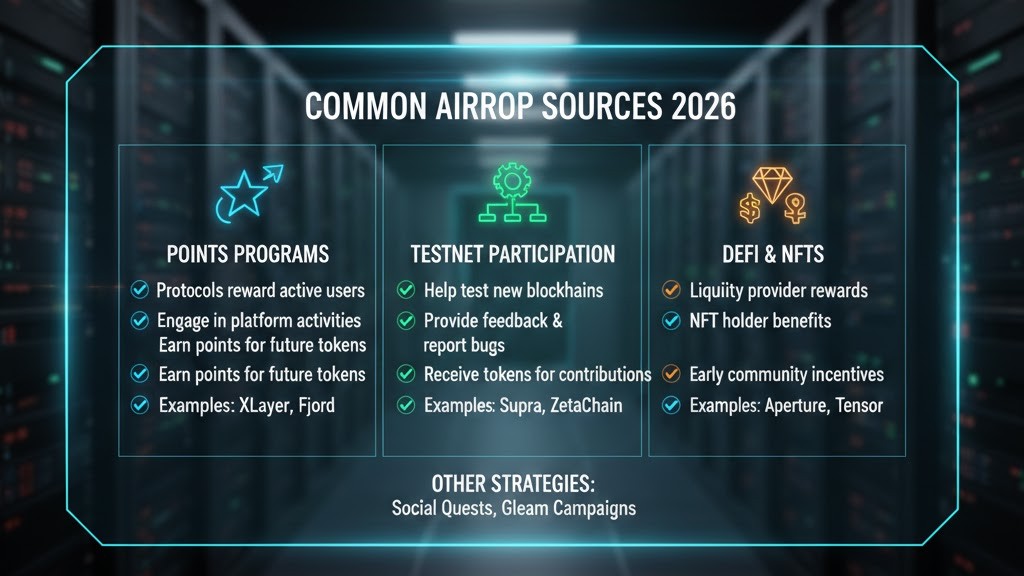
Where Airdrops Usually Come From in 2026
To farm efficiently, you must understand where rewards often come from. In 2026, many airdrops are tied to real usage signals, not random luck. Projects may reward users who provide liquidity, bridge assets, use wallets, or complete community quests. Also, points systems are common, but they vary in quality. So, the goal is not to do everything. The goal is to focus on the types of activity that projects can measure and that look like genuine adoption. This section helps readers understand the main “source buckets” of airdrops.
Points Programs and “Season” Campaigns (How They Work)
Points programs track activity over time. They reward consistent users. However, points are not always equal to tokens. Sometimes they are only marketing. Therefore, treat points as “potential,” not as guaranteed value. Focus on programs that clearly describe what activity they reward and why. Also, watch for sudden rule changes. Strong programs communicate changes transparently. Weak programs change rules without notice. For readers, the best approach is conservative: do low-cost meaningful actions and avoid aggressive farming that looks like spam. This way, you build a credible on-chain footprint without high risk.
Testnets, Early Features, and Real Product Adoption
Some projects reward early testers. Testnets can be low-cost because they use test tokens, but scams can still exist in “testnet clothing.” So verification still matters. When a project has a working product, testnet participation can show real intent. However, do not overcommit time. Choose a few strong candidates and participate meaningfully. Also, document what you did, because proof tasks sometimes matter later. The advantage of testnets is low financial cost. The downside is time cost. Therefore, balance is key. Your routine should protect both your money and your hours.
Social Quests vs On-Chain Tasks (Which Matters More)
Social quests can help, but they are easy to fake, and many projects value on-chain behavior more. Still, a mix can be useful. For example, joining the community and learning the product can prevent mistakes. Yet you should avoid spending hours chasing small points. Instead, treat social tasks as “supporting actions” and keep them limited. On-chain tasks should be minimal, meaningful, and consistent. That combination makes sense because it mirrors real user behavior. Readers like this advice because it reduces stress and stops them from feeling they must do everything.
Time Management: Max Rewards Without Wasting Your Week
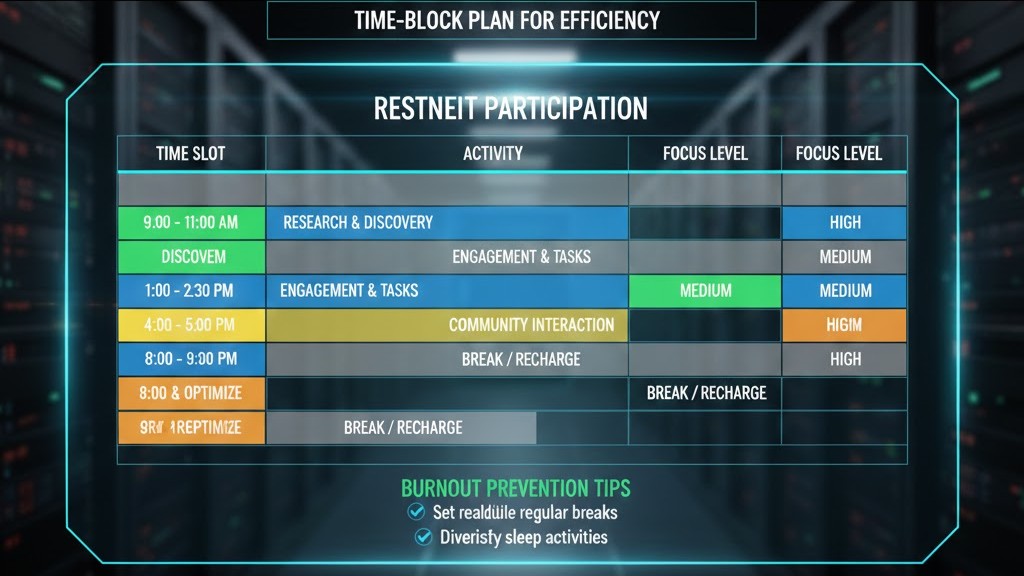
The biggest hidden cost in airdrop farming is time. Many people spend hours daily and burn out. Others chase every rumor and lose focus. A better approach is structured time blocks. You will research, shortlist, interact, and clean up on specific days. Also, you will define a weekly limit. This keeps the routine healthy and repeatable. It also improves content quality because you can write updates and insights based on real process, not random hype. This section teaches readers how to protect their time while still staying active.
Use a “3-Project Rule” to Stay Focused
Pick a small number of projects each week, and focus on them. This reduces confusion. It also reduces risk because you interact with fewer unknown apps. Additionally, it improves consistency, which matters for many reward systems. If you try to farm 20 projects, you will likely do shallow actions everywhere and remember nothing. With fewer projects, you can do meaningful steps and track them. Therefore, use the 3-project rule as your default. Then rotate slowly if needed. This simple constraint helps readers because it feels doable and prevents burnout.
Set a Weekly Budget for Fees and Stick to It
Fees can quietly destroy your ROI. So define a weekly spending limit for gas and bridges. Then treat it like a hard rule. If fees spike, pause and wait. If a project demands high fees for tiny tasks, it may not be worth it. Also, track total cost in your log. This makes your results more real, because you measure net value, not fantasy value. Many readers love this advice because it turns farming into a controlled plan, not gambling. When you manage fees, you reduce regret and improve long-term sustainability.
Build a Sunday Review: Keep, Pause, or Drop Decisions
At the end of each week, decide which projects you keep, which you pause, and which you drop. Use simple criteria: activity level, clarity, cost, and risk. If a project goes silent, pause it. If tasks become shady, drop it. If it stays consistent, keep it. This review step is powerful because it prevents “attachment.” People often stick with bad projects because they already spent time. But sunk cost is not strategy. A clear review process helps readers feel smart and in control, which boosts trust and repeat visits.
Safe Execution: How to Do Tasks Without Getting Drained
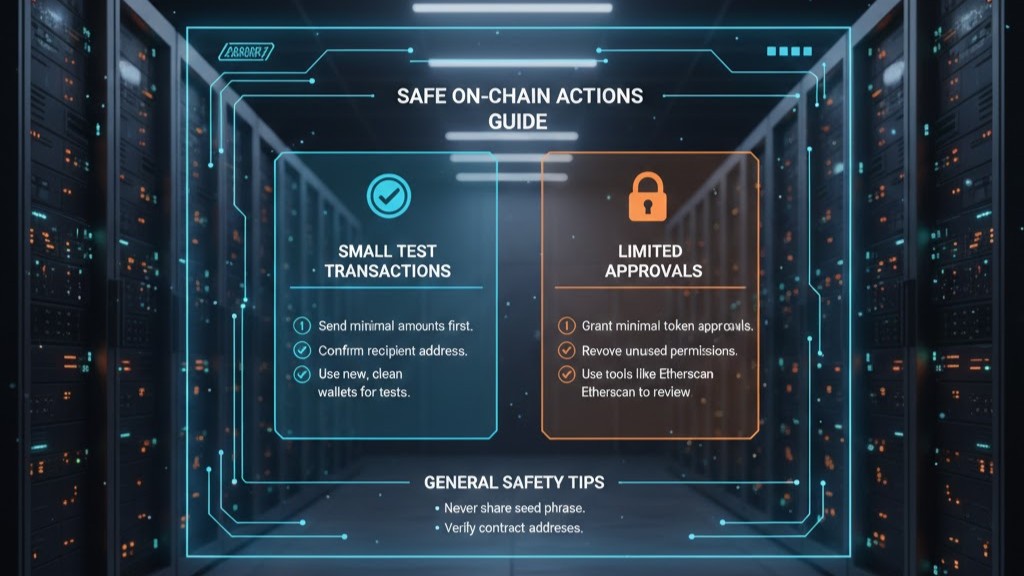
Execution is where most mistakes happen. A user is tired, clicks fast, and approves something dangerous. Therefore, you need execution rules. Also, you should slow down during critical steps. For example, when you sign messages or approve tokens, read the prompt. If anything feels weird, stop. Additionally, avoid doing tasks late at night when you are not focused. This section gives safe execution habits that reduce risk without killing progress. It also fits ad policies because it emphasizes safety, not unrealistic promises.
Always Start With Small Test Transactions
When you try a new dApp, start with the smallest possible action. This gives you a safety buffer. If the app behaves strangely, you can stop with minimal cost. Also, small transactions help you confirm that your wallet and network settings are correct. Many errors happen because users bridge too much or swap too much on the first try. So, test first, then scale later if needed. This habit is simple, yet it prevents huge losses. It also makes your routine more professional, because you act like a cautious operator, not a gambler.
Avoid Unlimited Approvals and Strange Signature Requests
Unlimited approvals are convenient, but they can be dangerous. If the dApp becomes compromised, your tokens can be drained. So approve limited amounts when possible. Also, be careful with signature requests. A signature is not always “harmless.” Some signatures can authorize actions indirectly. If the request looks unclear, cancel it and research. It is better to lose a few minutes than to lose your wallet. Readers appreciate this guidance because it is actionable. Also, it builds trust because you prioritize safety over hype.
Use a “One Tab” Rule to Reduce Phishing Risk
Phishing often happens through fake tabs, pop-ups, and copied websites. So keep your process clean. Open only one official tab at a time, and close it after the task. Avoid clicking links from random DMs or comments. Also, confirm the domain each time, because scammers use look-alike domains. This “one tab” rule reduces confusion and stops you from connecting your wallet to the wrong site. It sounds strict, but it is effective. Over time, it becomes a habit, and your risk drops significantly.
A January 2026 Checklist You Can Follow Every Week
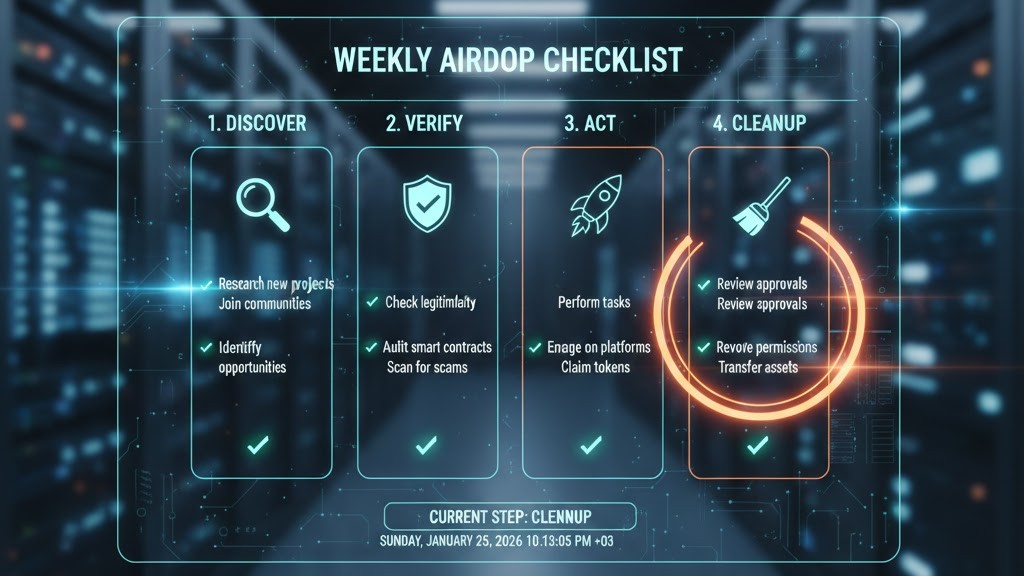
Now you combine everything into a simple checklist. This final section is what readers want to save and revisit. It also helps with engagement because it is practical and repeatable. Your goal is to farm safely, not to chase every trend. So this checklist is built around verification, controlled actions, and cleanup. If you follow it, you reduce scams, reduce time waste, and improve your chance of being eligible for future rewards. Also, it keeps the content ad-friendly because it focuses on education, safety, and responsible behavior.
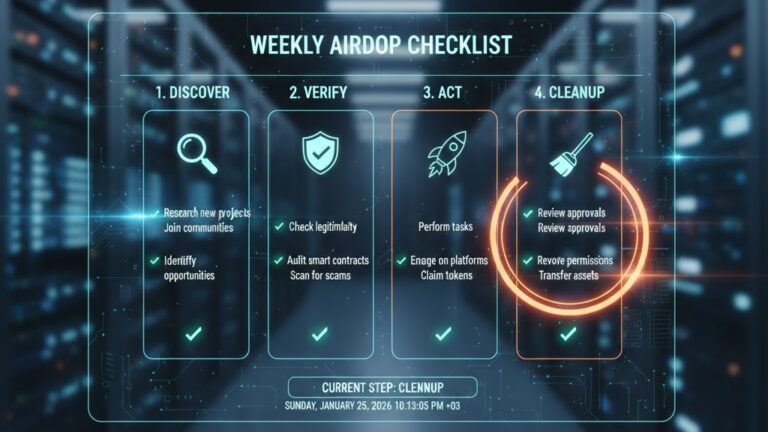
Weekly Checklist: Discover → Verify → Act → Clean
First, discover and shortlist on Monday. Second, verify official sources before any interaction. Third, do small meaningful actions midweek. Fourth, clean up on Sunday by revoking approvals and updating your log. Keep each step simple. Consistency matters more than intensity. This process is powerful because it turns random farming into a routine. Also, it makes your results measurable. Even if you do not get every airdrop, you build safer habits and learn faster. That learning compounds over time, and it improves everything you do in crypto.
Eligibility Mindset: Quality Behavior Beats Spam Transactions
Many projects fight sybil farming. So, if you do hundreds of tiny useless actions, you may look like spam. Instead, act like a real user. Do fewer actions that make sense. Use the product normally. Provide liquidity only if you understand risks. Participate in governance only if it is real. This mindset helps because it aligns with what projects want: real adoption. It also protects you because you avoid risky behavior just to “farm points.” Readers like this approach because it feels ethical, safer, and more sustainable.
Simple Safety Reminder: Missed Airdrops Are Cheaper Than Drains
This is the final rule: missing an airdrop is not a disaster. Losing your wallet is a disaster. So when you feel pressure, slow down. When you see urgency, step back. When you feel unsure, do not sign. This mindset protects your capital, your time, and your confidence. It also keeps you from chasing every trend. Over the long term, the safest farmer often wins more, because they stay in the game. That is the real edge: survival first, then strategy, then rewards.
Popular Articles